Bringing Books to Life: How AI and 3D Printing Transform Stories into Reality


Transform your favorite book scenes into tangible 3D printed models with AI-powered image generation
The Magic of Turning Pages into Physical Objects
Remember the first time a book truly transported you to another world? When the words on the page painted such vivid pictures that you could almost reach out and touch the characters, feel the texture of a dragon's scales, or hold the magical artifact that would save the kingdom?
What if you actually could?
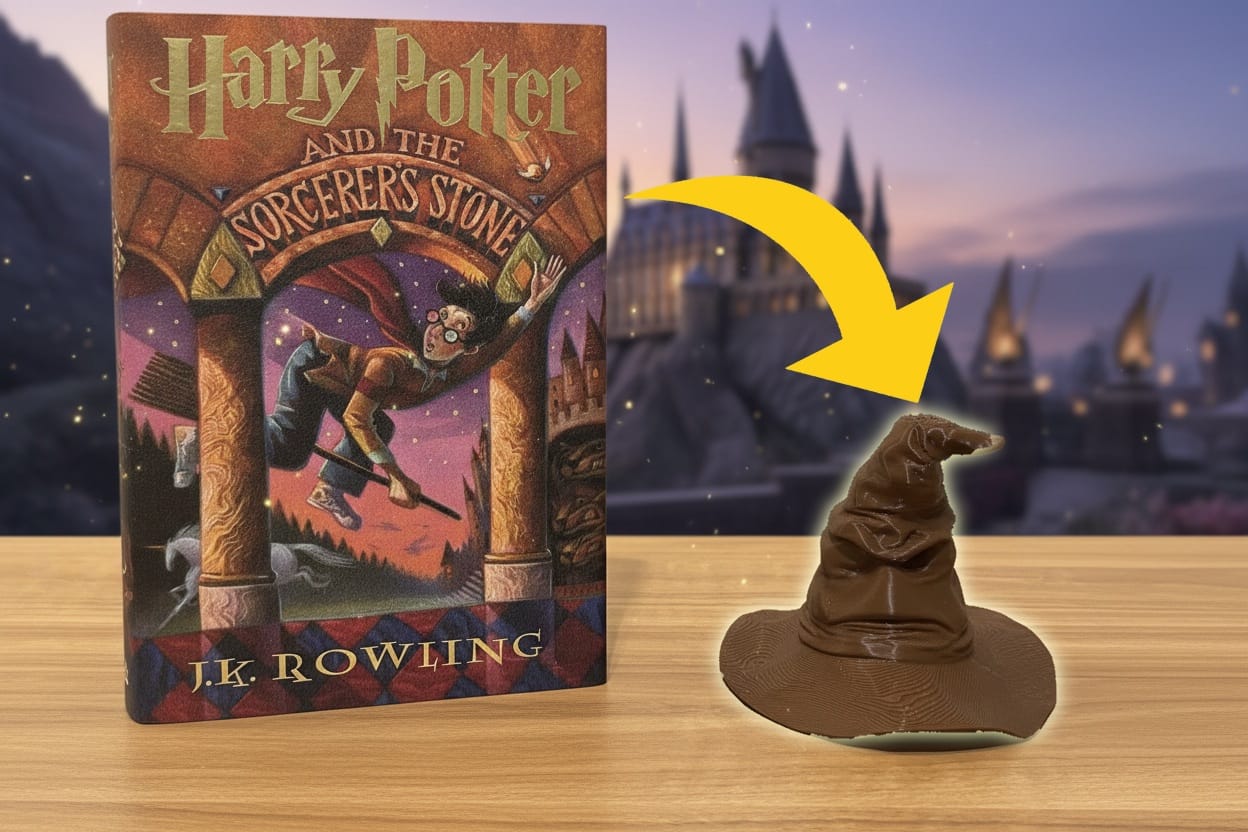
Welcome to the future of reading, where artificial intelligence and 3D printing technology converge to create something extraordinary: the ability to bring your favorite book scenes to life as physical, tangible 3D models you can hold in your hands.
The Challenge: Bridging Imagination and Reality
For decades, readers have been limited to the two-dimensional world of illustrations and their own imagination. Book lovers, educators, and collectors have long dreamed of ways to make stories more tangible. Sure, you could buy action figures or movie merchandise, but what about that specific scene from your favorite novel? That unique character description that exists nowhere else? That pivotal moment that gave you goosebills when you first read it?
Traditional 3D modeling required hundreds of hours of skill, expensive software, and technical expertise most readers simply don't have. But now, AI-powered 3D model generation is changing everything.
The Innovation: A Four-Step Journey from Page to Print
Our AI tool has pioneered a revolutionary process that makes bringing books to life incredibly simple. Here's how the magic happens:
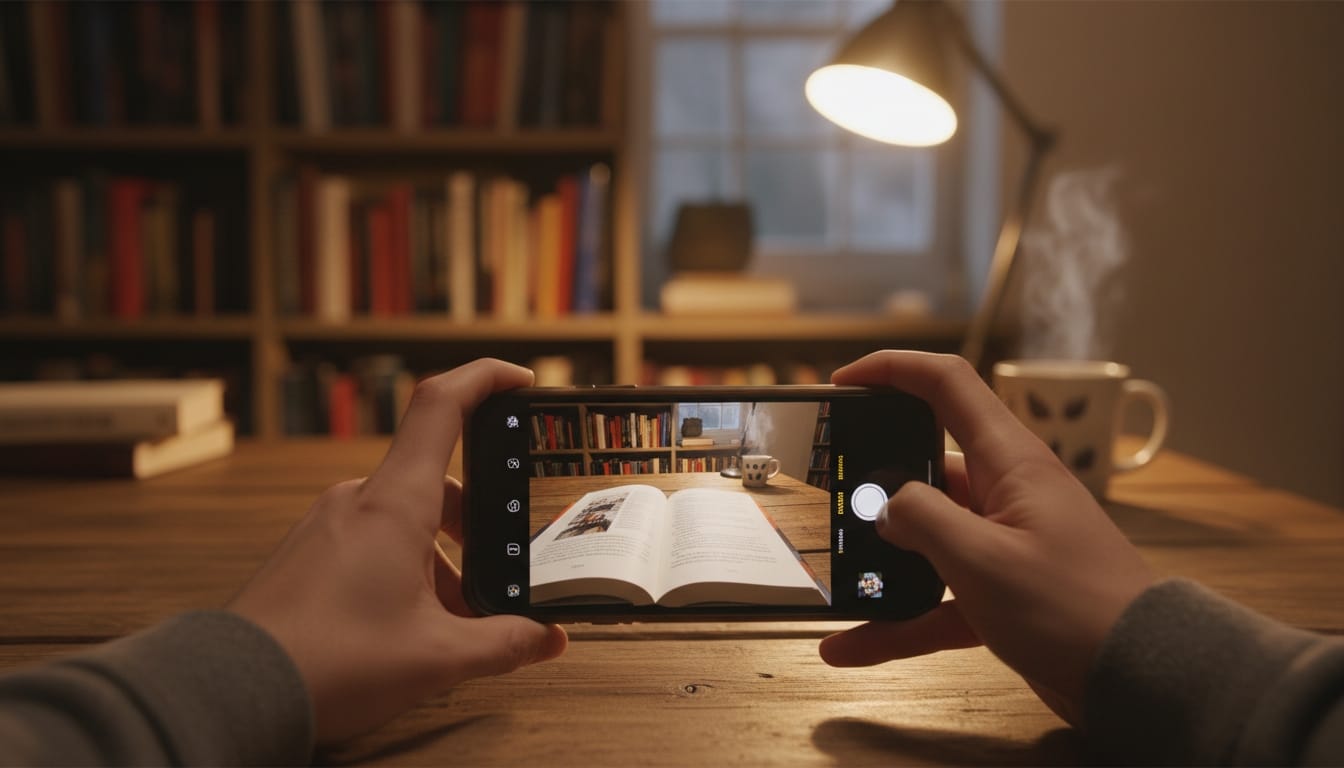
Step 1: Capture the Story
It starts with something beautifully simple: take a photo of your book page. Whether it's a dog-eared paperback, a pristine hardcover, or an e-reader screen, your camera becomes the bridge between the written word and physical reality.
The process works with any book:
- Fantasy novels with epic battle scenes
- Children's books with whimsical characters
- Science fiction with futuristic technology
- Historical fiction with period-accurate settings
- Non-fiction with anatomical models or architectural designs
Step 2: AI Image Generation: Visualizing the Written Word
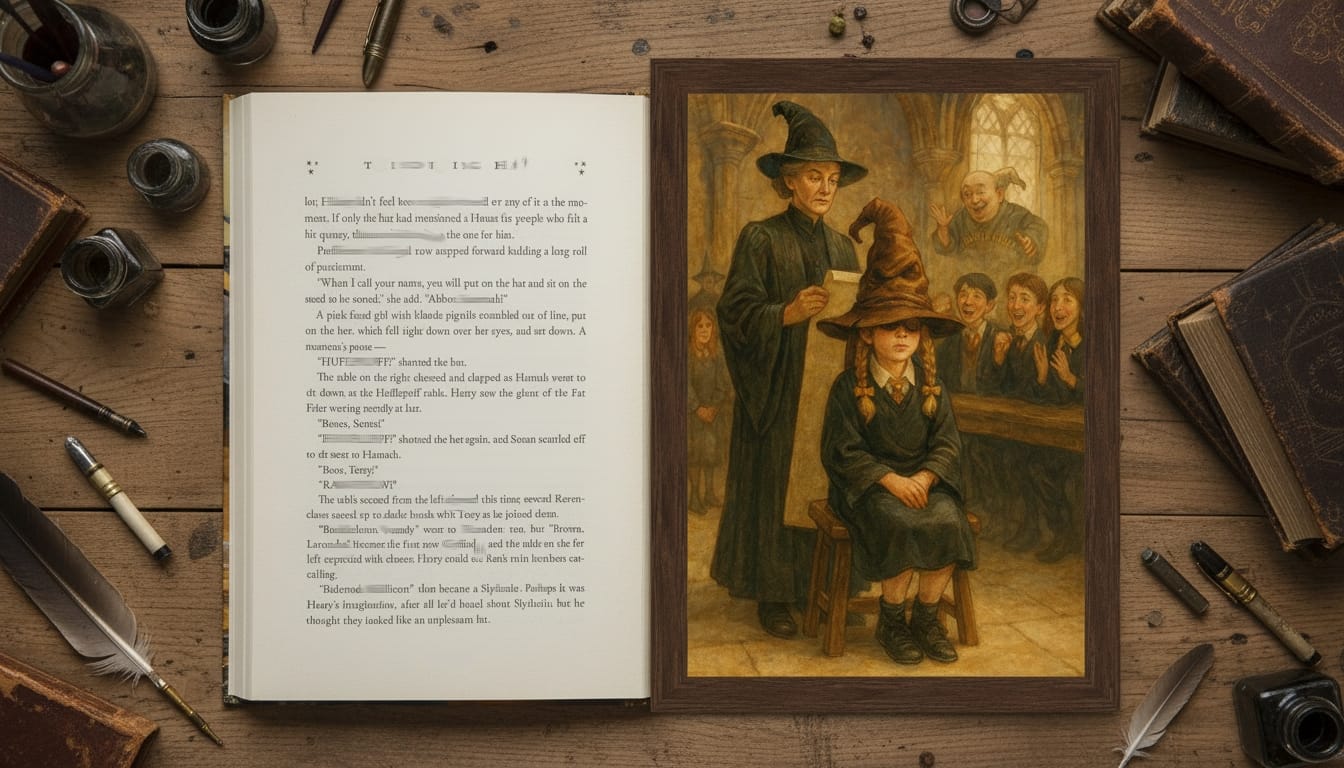
Here's where the first layer of AI magic happens. Our system analyzes the text on the page and uses advanced generative AI to create a detailed image based on what's happening in that scene.
Simply tell the AI: "Generate an image based on what is happening on this page of the book."
The AI reads and interprets:
- Character descriptions and actions
- Environmental details
- Emotional tone and atmosphere
- Spatial relationships between elements
- Key objects and focal points
Within moments, you have a custom-generated image that captures the essence of that particular scene, not some generic interpretation, but one specifically tailored to the exact words on your page.
Step 3: Image-to-3D Model Conversion
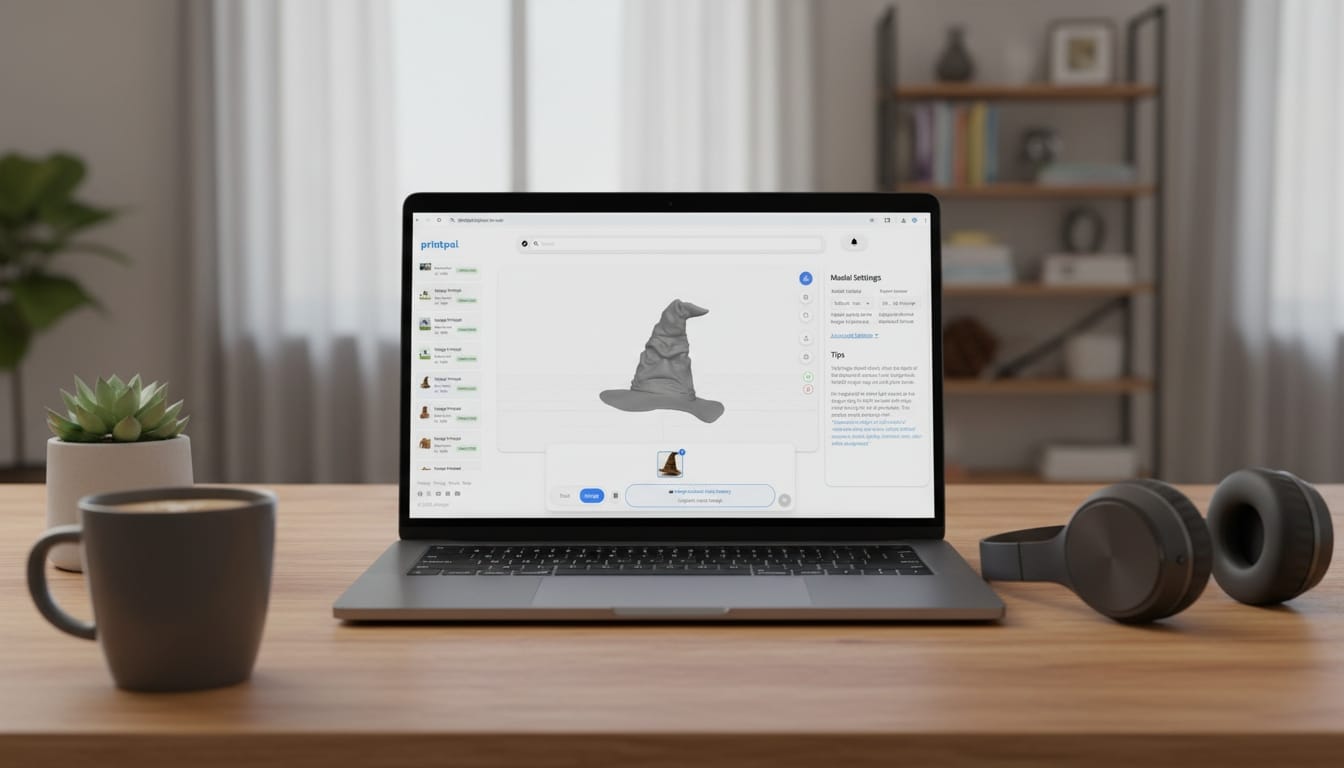
Now comes the second wave of AI innovation. Our image-to-3D model generator takes that 2D image and transforms it into a fully-realized three-dimensional model ready for printing.
This isn't just adding depth to a flat image; our AI:
- Interprets spatial relationships and depth cues
- Generates proper geometry and surfaces
- Creates printable mesh structures
- Optimizes for 3D printing success
- Ensures structural integrity
The technology understands the difference between foreground and background, recognizes objects and characters, and creates printable models that capture the dynamic energy of the original scene.
Step 4: 3D Print Your Scene
Finally, send your model to your 3D printer and watch as the scene materializes layer by layer. Whether you're using PLA, ABS, resin, or any other printing material, you'll soon hold a piece of your favorite story in your hands.
Real-World Applications: More Than Just a Novelty
This technology isn't just cool; it's transformative across multiple domains:
For Educators and Students
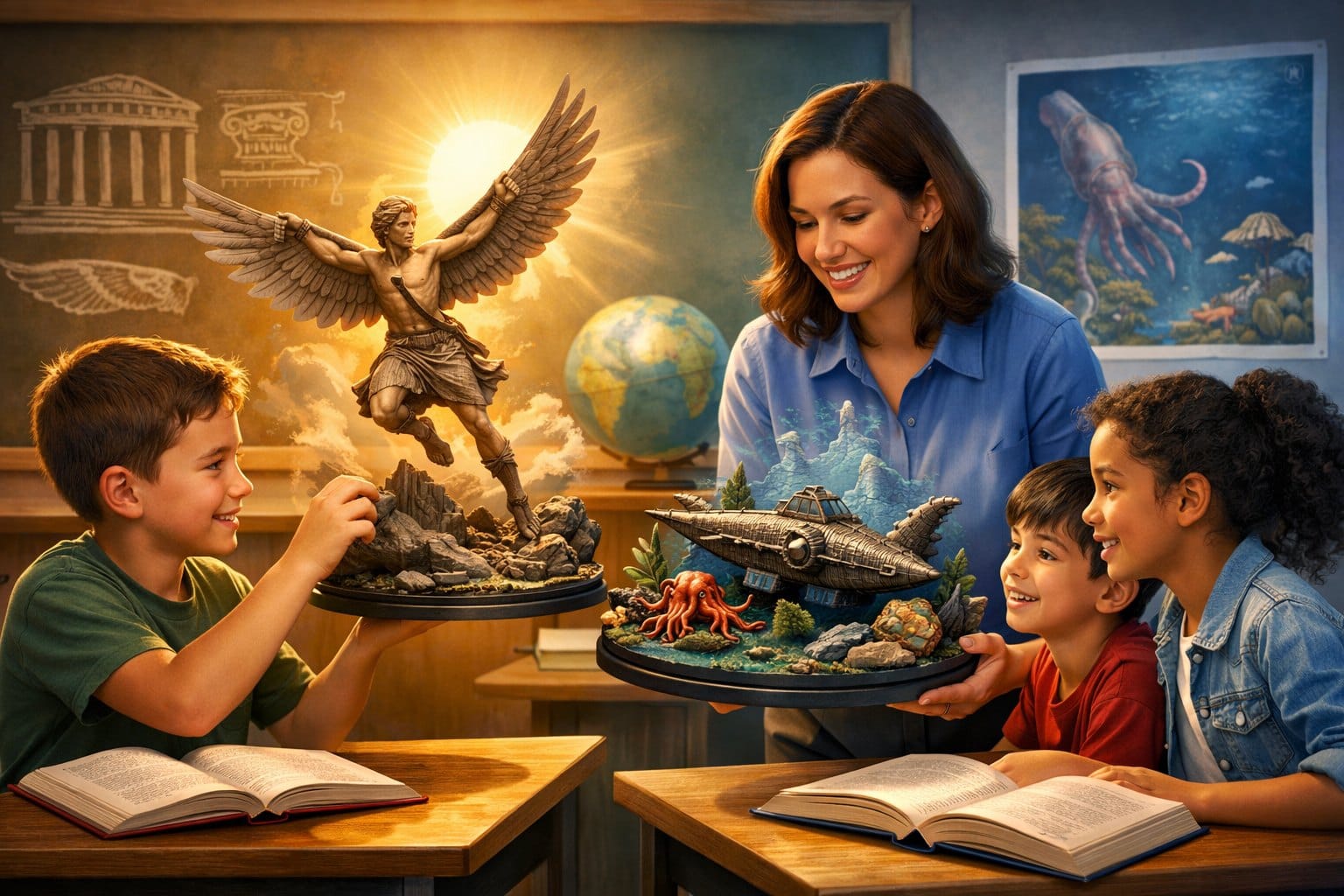
Bring literature to life in the classroom. Imagine studying Greek mythology while holding a 3D model of Icarus's flight, or learning about marine biology with a model generated from "Twenty Thousand Leagues Under the Sea." Complex scenes become tactile learning tools that engage visual, tactile, and kinesthetic learners.
For Book Clubs and Reading Communities
Create unique discussion pieces for your monthly meetups. Each member could print different scenes from the same book, leading to fascinating conversations about how we each visualize the same story differently.
For Authors and Publishers
Authors can now offer readers limited edition 3D printed scenes from their books as merchandise or promotional items. It's book marketing that you can literally hold in your hand.
For Collectors and Fans
Build a personal library of your favorite literary moments. Create a display shelf featuring key scenes from your top ten books, or focus on a single favorite series and print every major plot point.
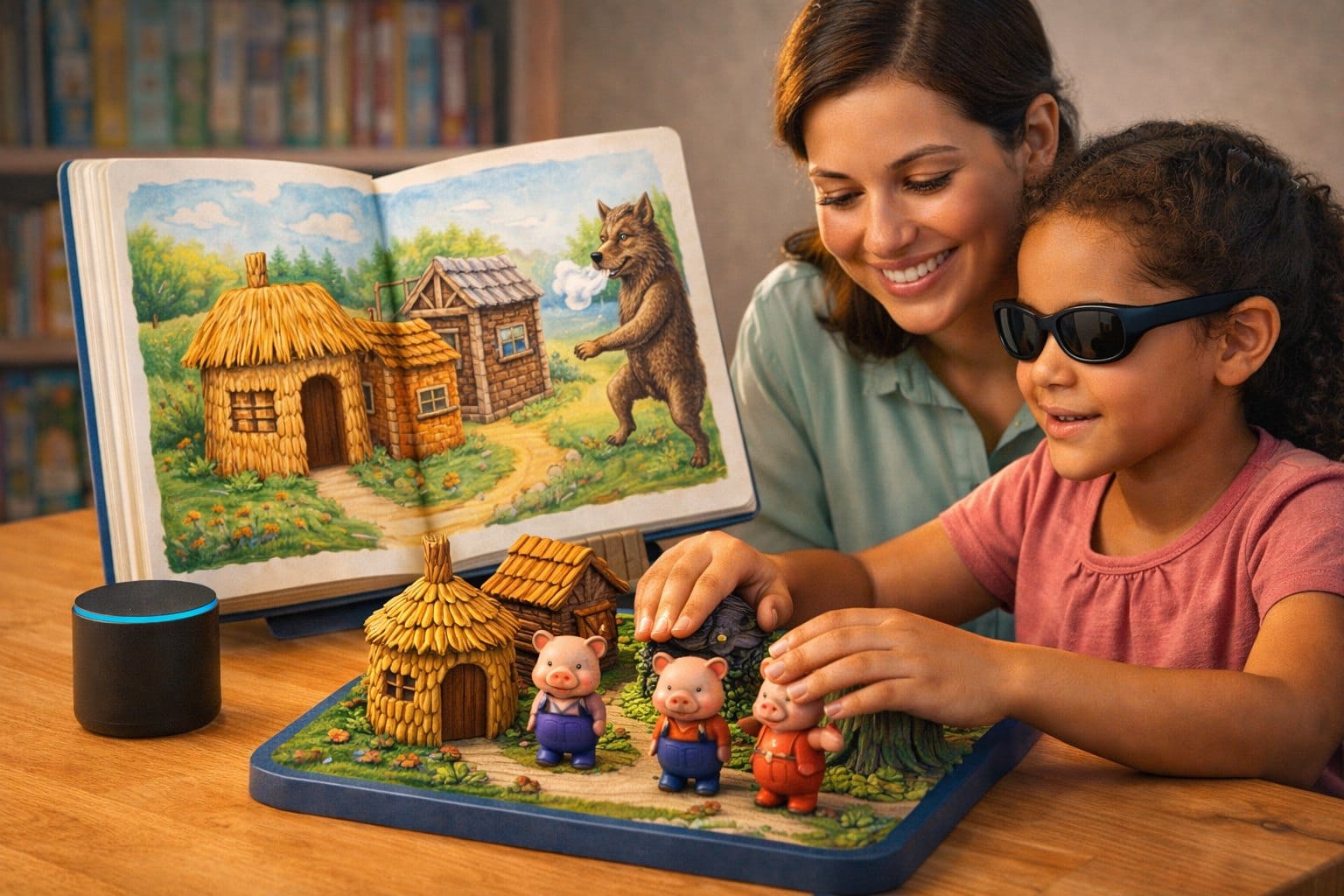
For Accessibility
For visually impaired readers, this technology can create tactile representations of illustrated children's books, allowing everyone to "see" the story through touch.
The Technical Magic: How Our AI Makes It Possible
Advanced Natural Language Processing
Our system doesn't just scan words; it understands context, narrative flow, and descriptive language. It can distinguish between active scenes and reflective passages, knowing when to generate action-packed models versus quieter, more contemplative ones.
Multi-Modal AI Integration
By combining text analysis, image generation, and 3D modeling AI in a seamless pipeline, we've created an end-to-end solution that requires no technical expertise. You don't need to know anything about 3D modeling, mesh editing, or print optimization; the AI handles it all.
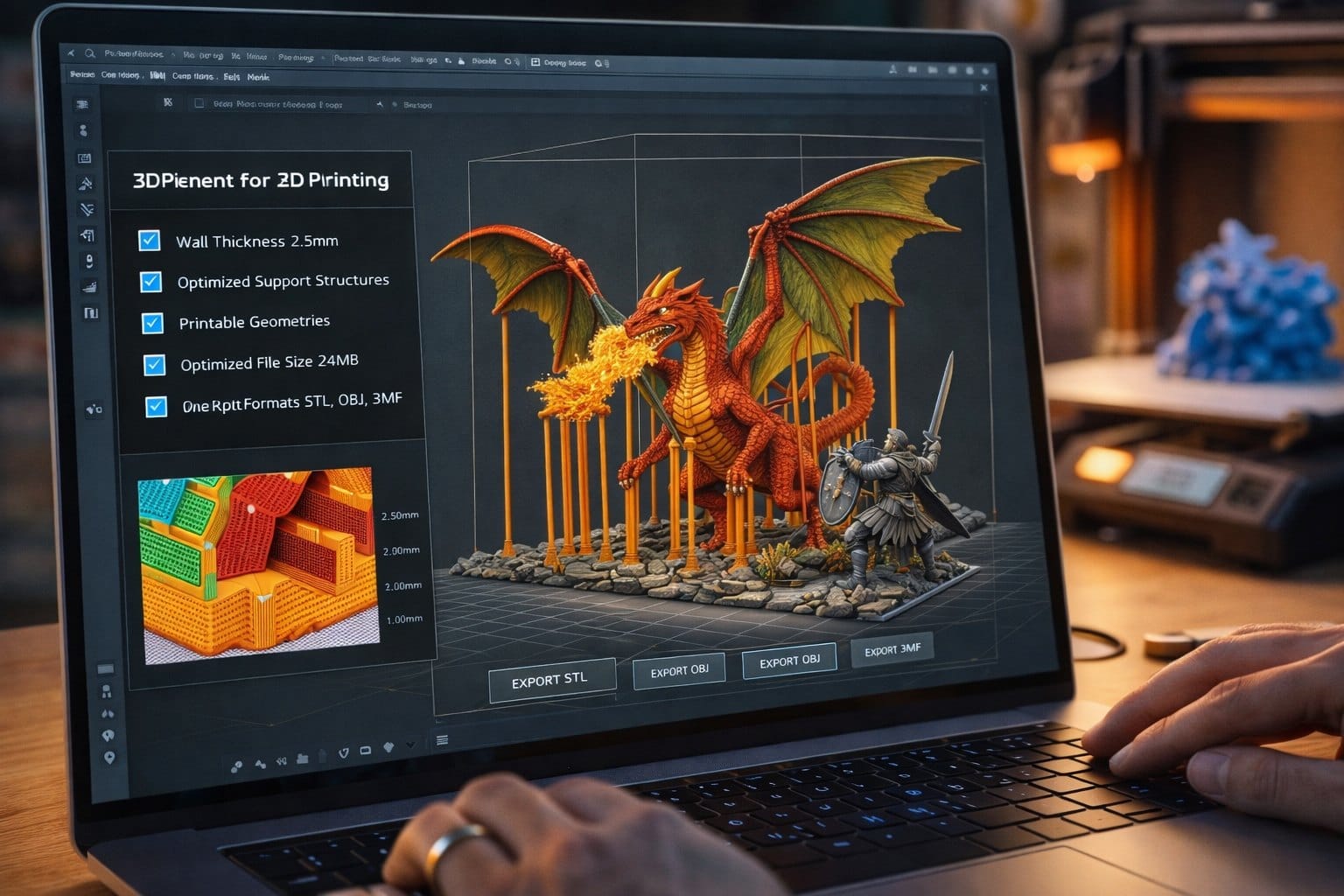
Optimized for 3D Printing
Unlike generic 3D models you might find online, our AI specifically generates models with 3D printing in mind:
- Appropriate wall thickness
- Proper support structure consideration
- Printable geometries
- Optimized file sizes
- Multiple format exports (STL, OBJ, 3MF)
Getting Started: Your First Book-to-Print Project
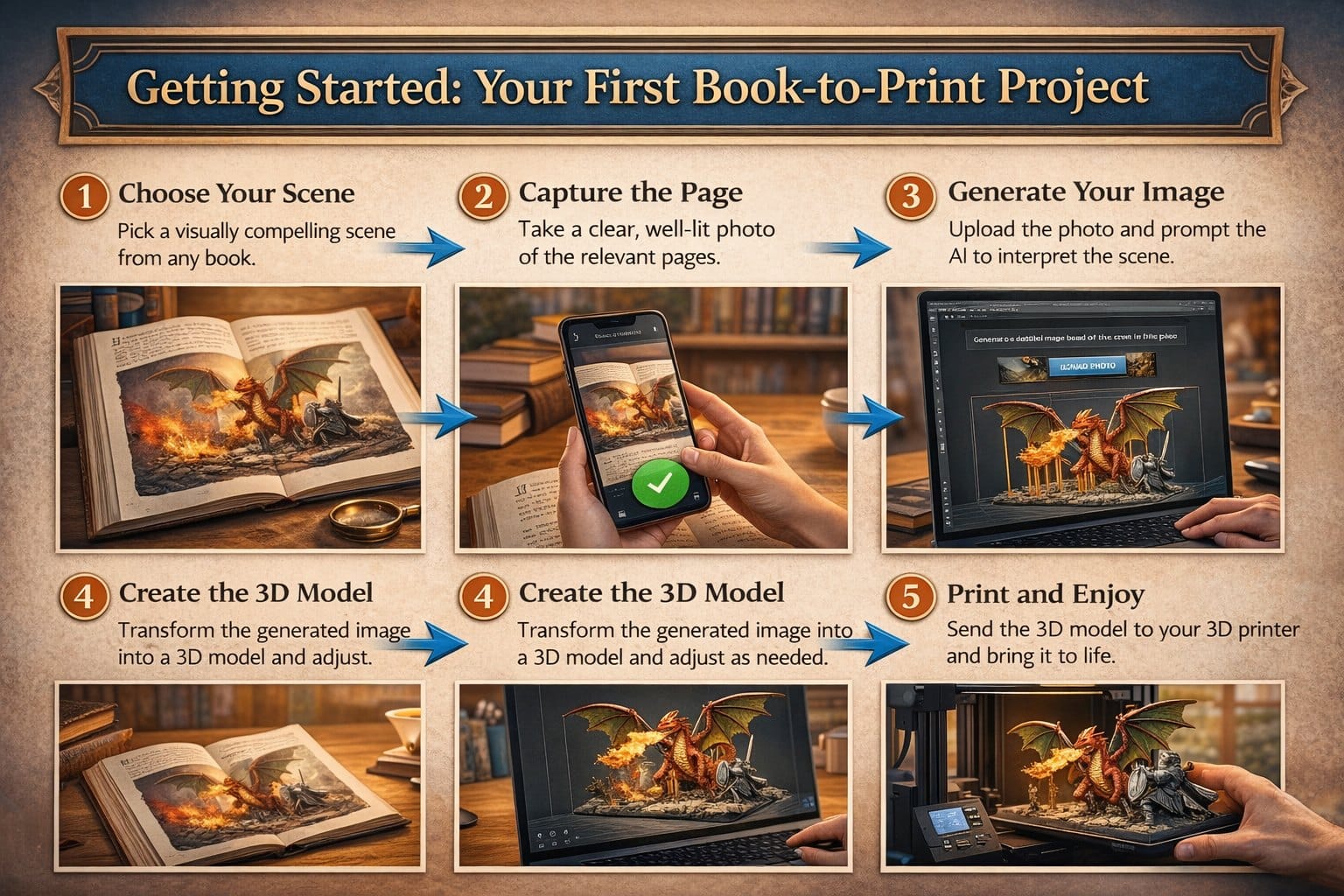
Ready to bring your favorite book to life? Here's a quick start guide:
- Choose Your Scene: Pick a visually compelling moment from any book. Action scenes, dramatic encounters, or detailed descriptions work best for first projects.
- Capture the Page: Take a clear, well-lit photo of the relevant pages. Make sure the text is readable in the image.
- Generate Your Image: Upload the photo and prompt our AI to interpret the scene. You can iterate and refine the image until it matches your vision.
- Create the 3D Model: Use our image-to-3D converter to transform your image into a printable model. Preview it from all angles and make any desired adjustments.
- Print and Enjoy: Download your model file and send it to your 3D printer. In a few hours, you'll have your literary scene in physical form.
Tips for Best Results
Choose Descriptive Passages: The more detail the author provides, the better your AI-generated image will be. Rich, descriptive writing translates into richer 3D models.
Consider Scale: Think about what will print well. A single character or small group often works better than trying to capture an entire battlefield in miniature.
Experiment with Perspective: Try generating the same scene from different viewpoints described in the text for varied results.
Use High-Quality Photos: Better source images lead to better AI interpretation and more accurate 3D models.
Start Simple: Your first projects should be straightforward scenes with clear subjects. As you get comfortable with the process, you can tackle increasingly complex scenarios.
The Future of Interactive Reading
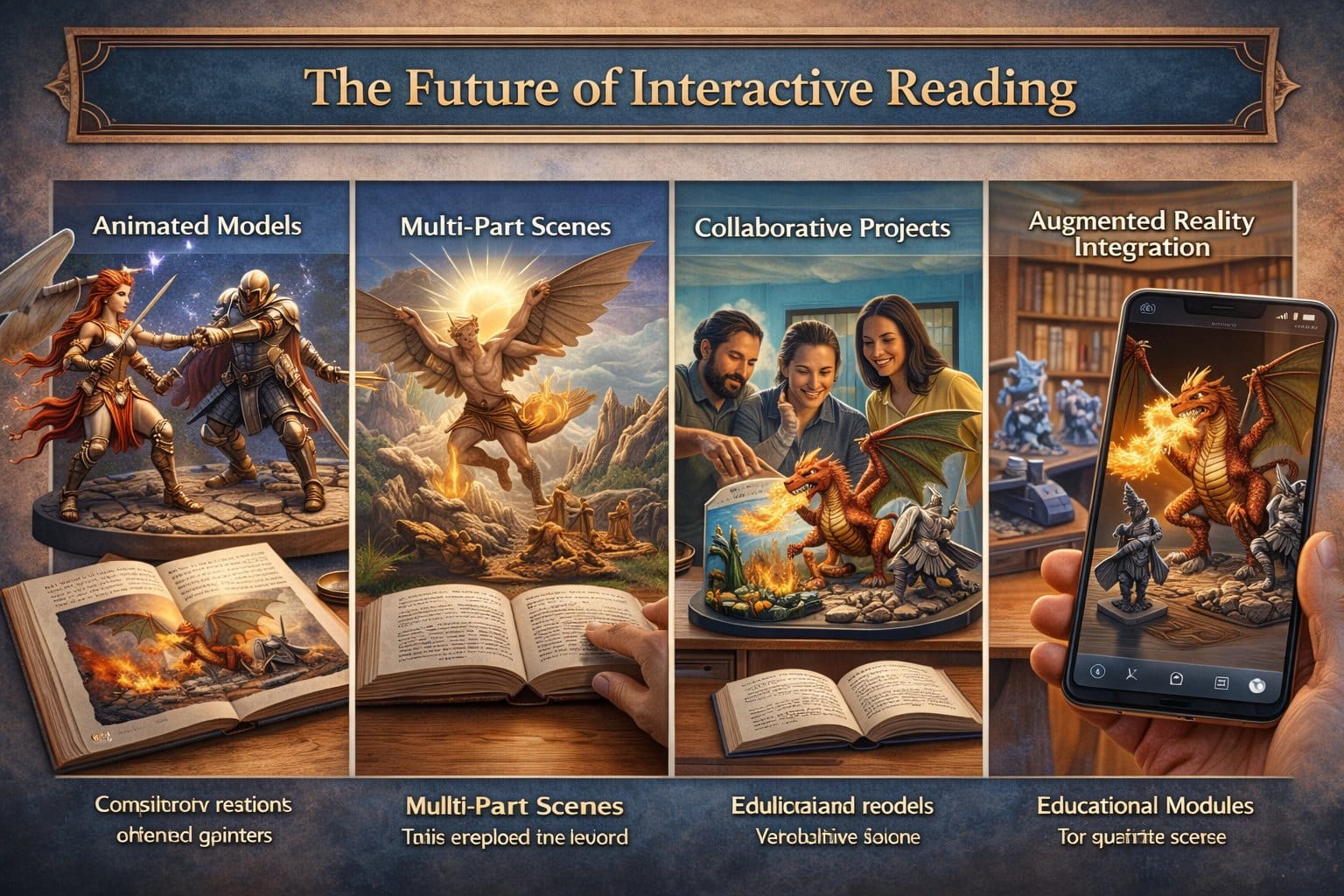
This is just the beginning. As AI technology continues to evolve, we're exploring even more exciting possibilities:
- Animated Models: 3D printed figures with articulated joints for posable characters
- Multi-Part Scenes: Complex dioramas that print in sections and assemble together
- Collaborative Projects: Community-sourced interpretations where readers share and remix models
- Augmented Reality Integration: Scan your printed model with your phone to see animations or hear audio clips
- Educational Modules: Curated collections of printable models for specific books used in schools
Join the Revolution: Books, Unbound
The boundary between reading and experiencing is dissolving. With AI-powered 3D model generation, every reader becomes a creator, every book becomes an interactive experience, and every story can literally come to life.
Whether you're an educator looking for innovative teaching tools, a parent wanting to make reading more engaging for your children, a book club seeking unique discussion pieces, or simply a passionate reader who wants to see your favorite characters leap off the page, this technology opens up a world of possibilities.
The stories you love no longer have to exist only in your imagination or on the printed page. Now they can exist on your desk, your bookshelf, or your classroom table: tangible, touchable, and truly alive.
Start Creating Today
Ready to transform your reading experience? Try our AI-powered 3D model generator and bring your first book scene to life. What story will you create?
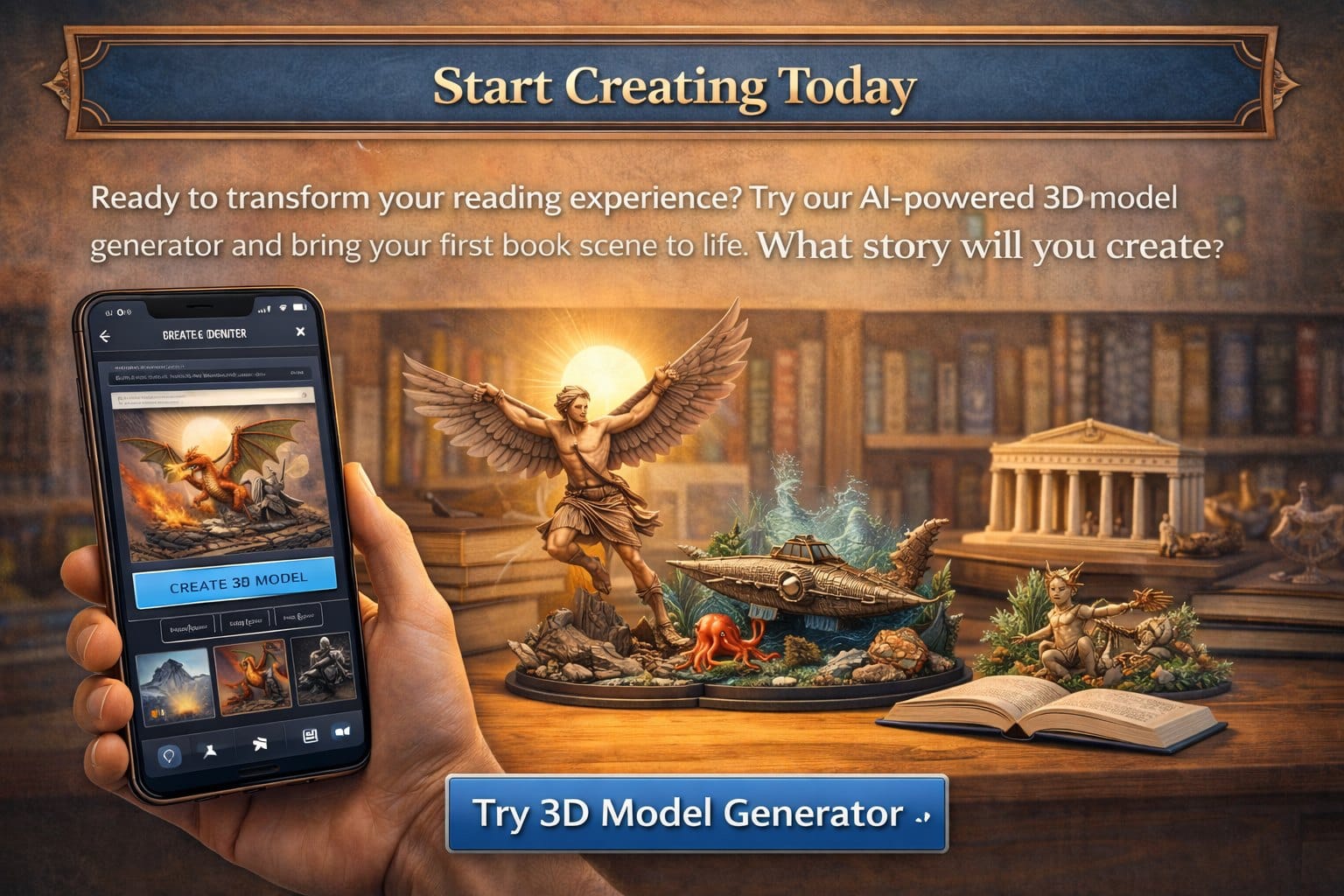
Ready to start your journey from page to print? Explore our AI 3D model generation tool today and discover what's possible when technology meets imagination.